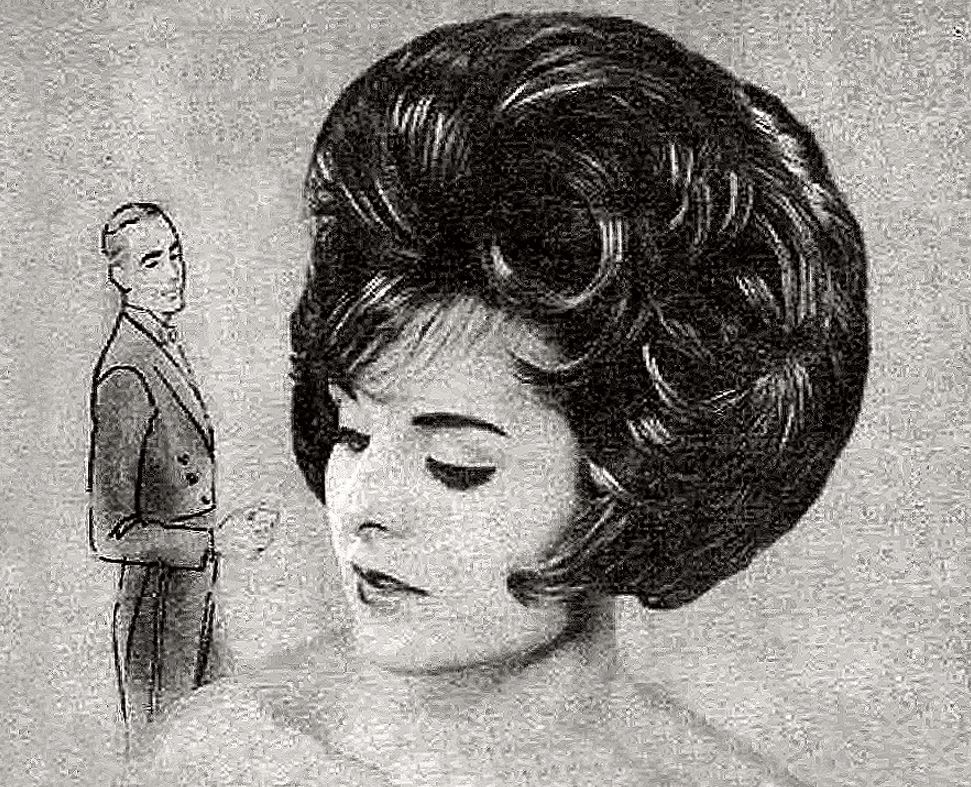
“We stand today on the edge of a new frontier-the frontier of the 1960s, a frontier of unknown opportunities and perils-a frontier of unfulfilled hopes and threats.” ~ John Fitzgerald Kennedy
John
Lennon's killer, Mark David Chapman, says he feels shame for shooting former
Beatle
During
a parole hearing, Mark David Chapman, who killed John Lennon in 1980, said he
feels remorse and shame for murdering the former Beatle.
Mark
David Chapman, the man who killed John Lennon, has been denied parole for the
11th time.
The
65-year-old was denied after being interviewed by a parole board on Aug. 19,
according to corrections officials. Chapman is currently at Wende Correctional
Facility in New York, where he's serving a 20-years-to-life sentence.
Chapman
shot and killed Lennon, a former Beatles star, outside his Manhattan apartment
on Dec. 8, 1980. Hours earlier, Lennon had autographed an album for a then-25-year-old
Chapman.
Chapman
has said previously that he feels “more and more shame” every year for the crime.
“I
was too far in,” Chapman told a parole board in 2018. “I do remember having the
thought of: ‘Hey, you have got the album now. Look at this, he signed it, just
go home.’ But there was no way I was just going to go home.”
He
added at the time: "Thirty years ago I couldn’t say I felt shame and I
know what shame is now. It’s where you cover your face … You don’t want to ask
for anything.”
Chapman's
next parole hearing is scheduled for August 2022.
Jackson Carey Frank
(March 2, 1943 – March 3, 1999) was an American folk musician. He released his
first and only album in 1965, produced by Paul Simon. After the release of the
record, he was plagued by a series of personal issues, and was diagnosed with
schizophrenia and protracted depression that prevented him from maintaining his
career. He spent his later life homeless and destitute, and died in 1999 of
pneumonia. Though he only released one record, he has been cited as an
influence by many singer-songwriters, including Paul Simon, Sandy Denny, Bert
Jansch and Nick Drake. Rolling Stone journalist David Fricke called Frank
"one of the best forgotten songwriters of the 1960s."
His eponymous 1965 album,
Jackson C. Frank, was produced by Paul Simon while the two of them were living
in England immersed in the burgeoning local folk scene. The album was recorded
in six hours at Levy’s Recording Studio, located at 103 New Bond Street in
London.
Frank was so shy during the recording that he
asked to be shielded by screens so that Paul Simon, Art Garfunkel, and Al
Stewart could not see him, claiming: 'I can't play. You're looking at me.'
(Above Milk and Honey)
The best-known track from
the sessions, "Blues Run the Game", was covered by Simon and Garfunkel,
and later by Wizz Jones, Counting Crows, John Mayer, Mark Lanegan, Headless
Heroes, Colin Meloy, Bert Jansch, Eddi Reader, Laura Marling and Robin Pecknold
(as White Antelope), while Nick Drake also recorded it privately.
The song was also heard
in the 2018 film The Old Man & the Gun, while his song "Milk and
Honey" was heard in the 2003 film The Brown Bunny. "Milk and
Honey" was also covered by Fairport Convention, Nick Drake, and Sandy
Denny, whom he dated for a while. During their relationship, Jackson convinced
Sandy to give up her nursing profession to concentrate on music full time.
Although Frank was well
received in England for a while, in 1966 things took a turn for the worse as
his mental health began to unravel. Frank's mental health declined so
noticeably and completely that in early 1966 he entered St. John’s Hospital in
Lincoln for an evaluation. At the same
time he began to experience writer's block. As his insurance payment was on the
verge of running out he decided to go back to the United States for two years.
When he returned to England in 1968 he seemed a different person to his
friends. His depression, stemming from the childhood trauma of the classroom
fire, had grown worse, and he had completely lost whatever little self-confidence
he once possessed. Al Stewart recalled: He [Frank] proceeded to fall apart
before our very eyes. His style that everyone loved was melancholy, very
tuneful things. He started doing things that were completely impenetrable. They
were basically about psychological angst, played at full volume with lots of
thrashing. I don't remember a single word of them, it just did not work. There was
one review that said he belonged on a psychologist's couch. Then shortly after
that, he hightailed it back to Woodstock again, because he wasn't getting any
work.
While in Woodstock, he
married Elaine Sedgwick, an English former fashion model. They had a son and
later a daughter, Angeline. After his son died of cystic fibrosis, Frank went
into a period of even greater depression and was ultimately committed to a
mental institution. By the early 1970s Frank began to beg aid from friends. In 1975,
Karl Dallas wrote an enthusiastic piece in the British weekly music newspaper
Melody Maker, and in 1978, Frank's 1965 album was re-released as Jackson Again,
with a new cover sleeve, although this did not in the end make his music much
more popular outside of a small number of his fans.
Frank lived with his
parents in Elma, New York, for a few years in the early 1980s. In 1984, his
mother, who had been in hospital for open-heart surgery, returned home to find
Frank missing with no note or forwarding address. Frank had gone to New York
City in a desperate bid to find Paul Simon, but ended up homeless and sleeping
on the sidewalk. During this time he found himself in and out of various
psychiatric institutions.
Frank was treated for
paranoid schizophrenia, a diagnosis that was denied by Frank himself (he
maintained that he was suffering from depression caused by the trauma he had
experienced as a child). Just as Frank's prospects seemed to be at their worst,
a fan from the Woodstock area, Jim Abbott, discovered him in the early 1990s.
Abbott had been discussing music with Mark Anderson, a teacher at the local
college he was attending.
Though he never achieved
fame during his lifetime, his songs have been covered by many well-known
artists.